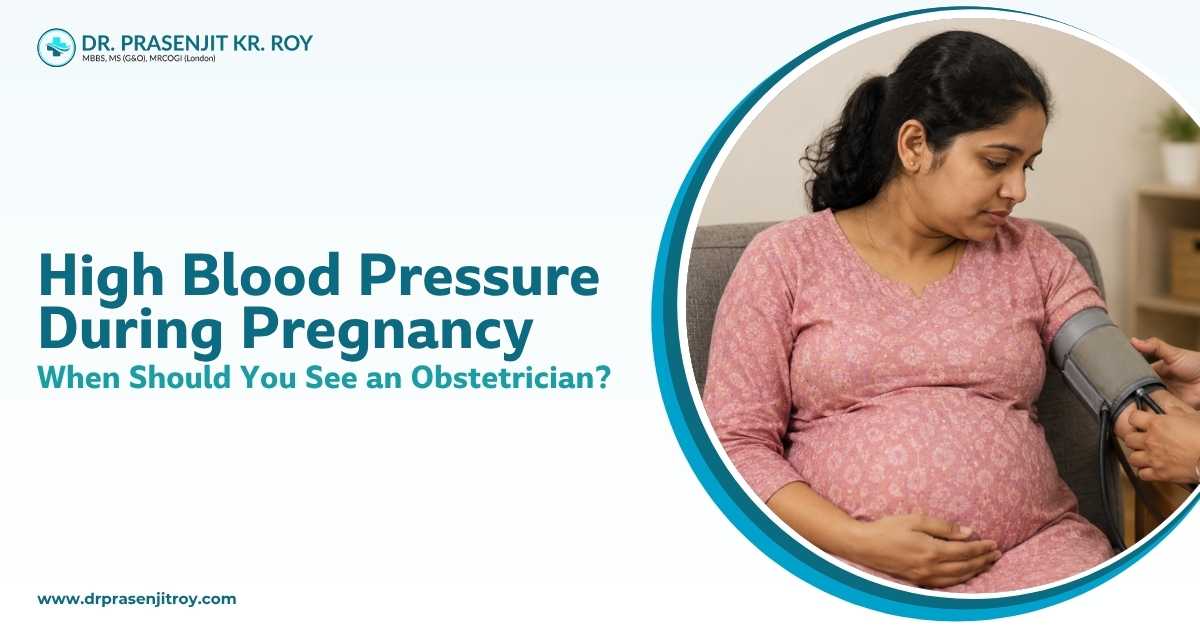

High blood pressure during pregnancy can sometimes be more than a temporary fluctuation within the body‘s system. It can be a sign of gestational hypertension or pre eclampsia in particular after weeks of pregnancy. It is important to know when to consult an obstetrician in Siliguri about elevated pressure readings to ensure that both mother and baby are cared for.
The World Health Organisation (WHO ) reports that pre-eclampsia is a hypertensive disorder that typically develops after 20 weeks of pregnancy and can lead to serious complications if not treated appropriately.
Furthermore, monitoring blood pressure is particularly crucial for individuals who have undergone assisted reproductive treatment, such as test-tube baby in Siliguri.
What is high blood pressure during pregnancy?
Blood pressure measures the pressure of blood against the walls of blood vessels. A reading of 140/90 mmHg or more can be a sign of hypertension during pregnancy.
High blood pressure during pregnancy can take a variety of forms. Some women have pre- existing hypertension, some develop it after 20 weeks of pregnancy, and some can develop it with pre-eclampsia.
As some women with high blood pressure may not display obvious symptoms, it is important to get regular antenatal scans done.
When should you see an obstetrician?
Although not every raised blood pressure reading is a sign of a potentially serious pregnancy complication, certain readings and other symptoms should never be ignored.
Your blood pressure reaches 140/90 mmHg or higher:
If your blood pressure reading is 140/90 mmHg or higher, advise your doctor and have them conduct an appropriate examination.WHO states that pre-eclampsia typically involves hypertension of at least 140/90 mmHg after 20 weeks of pregnancy, along with protein in the urine.
As such, the doctor might order further tests rather than just going off a single blood pressure reading.
You have severe / Persistent headaches:
Headaches are one of the most common ailments people will experience, but if a headache persists during pregnancy, it is important to get it evaluated by a doctor.
WHO lists severe headaches as one of the possible symptoms of pre-eclampsia. Do not take a severe headache as normal if there are other warning symptoms.
You experience vision changes :
Changes to one’s vision can be a dangerous sign of a range of health conditions. According to WHO, visual disturbances are a possible symptom of severe pre-eclampsia. Contact your healthcare provider if you feel anything is wrong with your vision.
You develop upper abdomen pain:
Pain in the upper abdomen, particularly in combination with other worrying signs or symptoms, should be evaluated by a healthcare professional to get to the bottom of the cause.
WHO lists upper abdominal pain as a possible symptom of pre-eclampsia.
You notice sudden swelling of the hands or face:
It is normal to experience some swelling during pregnancy, but sudden and extreme swelling of the hands and face can be an indicator of pre-eclampsia. WHO lists swelling of the hands and face as possible symptoms of pre-eclampsia. If you notice this happening, it is best to speak with your obstetrician.
Why can high blood pressure be dangerous during pregnancy?
High blood pressure associated with pre-eclampsia can affect the health of both the mother and the baby. If the condition progresses to a severe form, it can have detrimental effects on organs such as the kidneys, liver, and brain.
WHO lists complications such as eclampsia, HELLP syndrome, organ damage, placental abruption, preterm birth, and foetal growth restriction. This does not mean that every pregnant woman with high blood pressure during pregnancy will experience these complications. Regular antenatal care ensures that the condition can be detected and managed at an early stage.
What tests may be needed?
If your healthcare provider detects high blood pressure during pregnancy, they may recommend further tests, based on your symptoms, stage of pregnancy, and medical history.
● Blood pressure checks:Repeated readings can help you determine whether your blood pressure is consistently high and whether more frequent monitoring is required.
● Urine tests: A urine test may be required to check for protein. Protein in the urine can be an important finding when determining if pre-eclampsia is present.
● Blood tests:Blood tests can be used to measure the general health of the mother and detect any possible complications that could arise, such as damage to the liver and kidneys.
● Foetal Monitoring: Depending on the individual needs and pregnancy, the healthcare provider may recommend monitoring the baby’s growth and well-being. The exact tests required can vary from pregnancy to pregnancy.
Who has a higher risk of pre-eclampsia?
.png)
Some women have a higher risk of developing pre-eclampsia than others. According to WHO, risk factors can include:
● First pregnancy
● Obesity
● Pre-existing hypertension
● Diabetes
● Kidney disease
● Family history of pre-eclampsia
Having one or more of these risk factors does not necessarily mean that pre-eclampsia will develop, but it does mean that you may need supervision from a medical professional.
Can high blood pressure be present even when you feel completely well?
Yes, you can. High blood pressure can occur without causing any noticeable symptoms. This is why regular antenatal check -ups are also essential. Blood pressure readings matter even if the pregnant woman feels well. WHO recommends regular prenatal care and blood pressure monitoring as part of identifying and managing pre-eclampsia. Therefore, even if you feel well, an abnormal blood pressure reading should not be ignored.
What steps should you take if your blood pressure is high?
If your blood pressure is found to be elevated during pregnancy, stay calm and contact your healthcare provider for appropriate guidance and recommendations.
Depending on the reading and your symptoms, your doctor may ask you to repeat the measurement or visit a healthcare facility for further tests.
It is important not to start, stop, or change any medication on your own. Any medication or treatment during pregnancy should be discussed with a qualified healthcare provider.
Women seeking Gynaecologist and obstetrician doctors in Siliguri should get guidance from an appropriate and qualified medical professional so that the antenatal care can be suitable and pregnancy complications can be addressed if they arise.
How can regular antenatal care help?
Regular, scheduled visits to a healthcare professional can ensure that any potential complications are identified at the earliest possible stage.
A healthcare professional can also evaluate your symptoms and determine whether you should undergo further tests. In particular, regular antenatal care is important if you already have hypertension or have had pregnancy-related blood pressure problems in the past; you may want to discuss this with your healthcare provider during antenatal care visits.
Final thoughts
High blood pressure during pregnancy should be taken seriously, particularly if readings are consistently high or if you are displaying other worrying symptoms. Regular antenatal care can help identify pregnancy-related hypertension and pre-eclampsia and get you the help you need.
If you are looking for a test tube baby in Siliguri, or exploring the right IVF centre in Siliguri, choose experienced medical guidance and comfort. For personalised guidance regarding fertility treatment and IVF options, consult Dr Prasenjit Kr Roy and discuss the treatment approach best suited to your needs.
FAQS:
1. Is 140/90 mmHg high blood pressure during pregnancy?
Yes, it is. A reading of 140/90 mmHg or higher is considered to be hypertension and should be looked into during pregnancy. WHO uses this measurement as the threshold for hypertension when describing preeclampsia.
2. What symptoms should i watch for with high blood pressure during pregnancy?
Important symptoms to watch out for include severe headaches, visual disturbance, upper abdominal pain, swelling of the hands and face, nausea or vomiting, and difficulty breathing.
3. Can pre-eclampsia occur without symptoms?
Yes, it can. Some women may not exhibit any obvious symptoms. As such, regular blood pressure readings and antenatal checkups can help detect problems at an early stage.
4. Can high blood pressure affect the baby?
Severe pregnancy-related hypertension and pre-eclampsia can have detrimental effects on the baby, such as increasing the risk of complications like foetal growth restriction and preterm birth. Regular antenatal monitoring can help ensure that any potential risks can be addressed by a medical professional.
5. Can high blood pressure during pregnancy be prevented?
Some risk factors for high blood pressure and pre-eclampsia cannot be prevented, but regular antenatal care can help identify elevated blood pressure and other warning signs early. Follow your obstetrician’s advice, attend scheduled checkups, and discuss any existing health conditions or pregnancy-related risk factors with your doctor.